Walk into any department store and you'll find them side by side on the rack: wide-leg trousers and palazzo pants. They look similar. They're both full-volume. They both extend from hip to hem without tapering. A sales associate might even tell you they're "basically the same thing."
They are not the same thing. And confusing them will cost you money, time, and the frustration of owning a pair of trousers that never quite works. The difference between palazzo pants and wide-leg trousers is not semantic — it's structural, behavioral, and deeply practical. Let's settle this once and for all.
The Short Answer
Here's the difference in one sentence: Wide-leg trousers are structured; palazzo pants are fluid. Everything else — the fabric, the drape, the occasion, the styling — flows from that single distinction.
Now let's go deeper.
Construction: How They're Cut
Both garments share a basic architecture — full volume from the hip to the hem, no tapering. But the way that volume is achieved differs significantly.
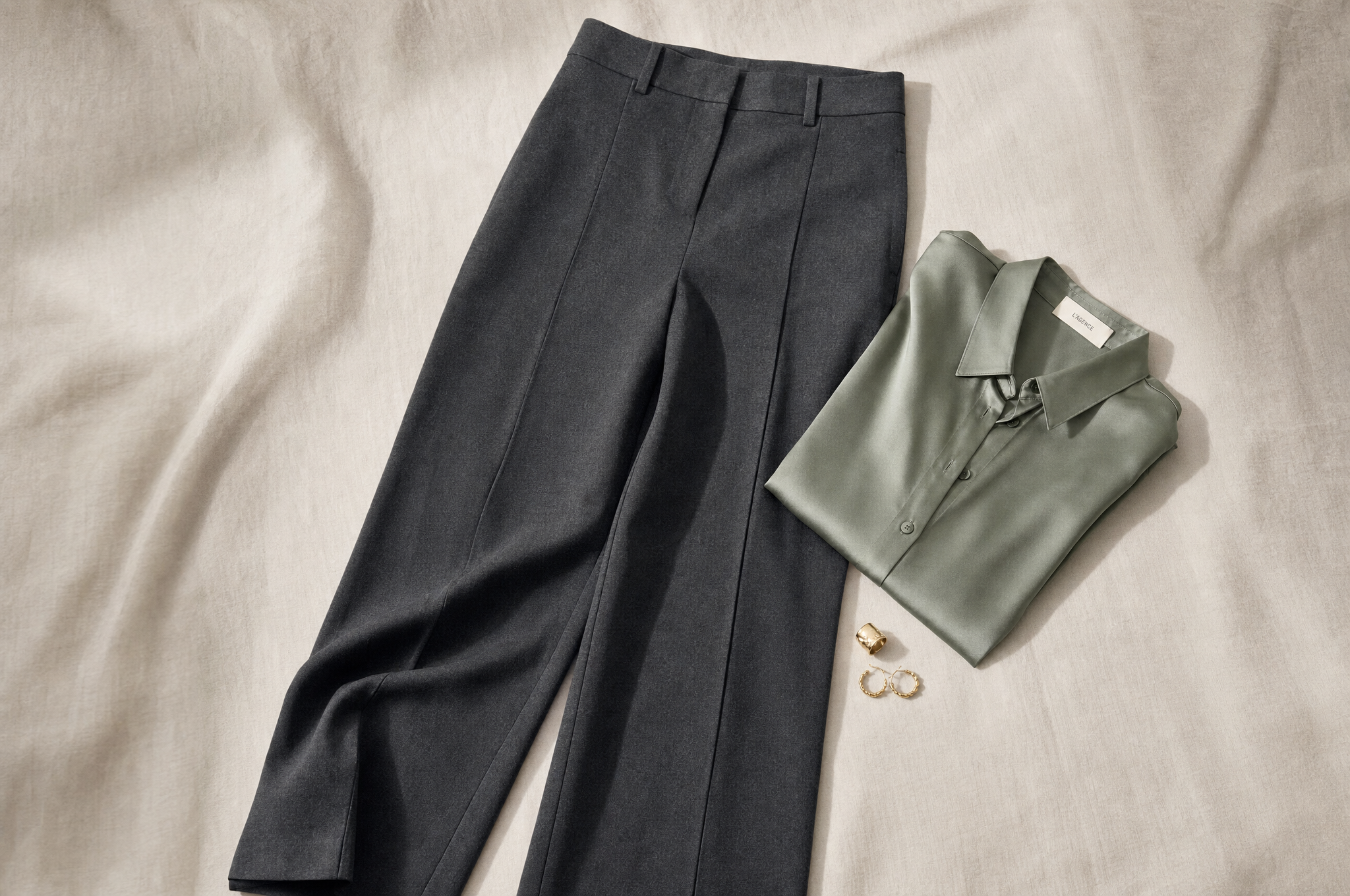
A wide-leg trouser is cut from a fabric with enough body and weight to hold its shape. The leg falls in a relatively straight line from the hip, maintaining consistent volume. When you stand still, the fabric stays where it is. When you walk, it moves with you but returns to its shape. Think of it as architecture — it's built to hold a form.
A palazzo pant is cut from a lightweight, fluid fabric — typically a crepe, chiffon, silk, or fine jersey. The leg is often cut even wider than a wide-leg trouser (sometimes dramatically so), and the fabric drapes rather than holds. When you stand still, the fabric pools slightly at the hem. When you walk, it moves like a skirt — flowing, billowing, catching the air. Think of it as water — it takes the shape of whatever contains it.
The wide-leg trouser is tailoring. The palazzo pant is draping. One is structure; the other is movement.
Fabric: The Deciding Factor
If you're standing in a fitting room wondering whether what you're wearing is a wide-leg trouser or a palazzo pant, check the fabric. That's the tell.
Wide-leg trousers are typically made from:
- Wool (tropical, flannel, crepe) — the classic. See our wool trouser guide for the full breakdown of weaves.
- Cotton twill or gabardine — sturdy, structured, often used for more casual styles.
- Heavyweight linen blends — enough body to hold a shape while remaining breathable.
- Densely woven synthetics — though we'd advise caution here, as cheap synthetics don't drape or breathe well.
Palazzo pants are typically made from:
- Silk or silk blends — the ultimate fluid fabric. Moves beautifully, feels luxurious.
- Crepe — a textured fabric with a beautiful, weighted drape.
- Chiffon or georgette — extremely lightweight and sheer, often lined.
- Fine jersey — a knit fabric that drapes softly and moves with the body.
- Rayon or viscose — semi-fluid with a soft hand and good drape.
Notice the pattern: wide-leg fabrics have body and weight. Palazzo fabrics have drape and movement. This isn't a minor distinction — it determines everything about how the garment behaves on your body.
How They Wear: The Behavioral Difference
Here's where the difference becomes practical. The same woman can look entirely different in a wide-leg trouser versus a palazzo pant, even if the two garments are nominally the same size and cut.
Wide-leg trousers create a defined silhouette. Because the fabric holds its shape, the line from your hip to your hem is consistent and deliberate. The garment looks intentional — like it was cut for a purpose. This makes wide-leg trousers appropriate for structured environments: offices, meetings, evening events. They look sharp.
Palazzo pants create a fluid silhouette. Because the fabric moves with gravity and air, the line from hip to hem is softer and more organic. The garment looks romantic — like it was designed to catch a breeze. This makes palazzo pants ideal for less structured occasions: summer parties, resort wear, evening dinners, weekends. They look effortless.
Styling: Different Rules for Different Garments
Styling Wide-Leg Trousers
Because wide-leg trousers are structured, they pair well with both structured and relaxed tops. A tucked-in blouse, a fitted knit, a cropped sweater — all work. The key, as we discussed in our wide-leg styling guide, is to balance the volume with something that defines your waist. Wide-leg trousers look polished with heels, sleek with loafers, and intentional with pointed-toe flats.
Styling Palazzo Pants
Palazzo pants require a different approach. Because they're fluid, they benefit from a slightly more relaxed top — something that moves with them rather than fighting against them. A silk camisole, a lightweight blouse (tucked or untucked), a fine-gauge knit. The overall effect should be cohesive — a head-to-toe sense of ease. Palazzo pants look beautiful with strappy sandals, espadrilles, and bare feet. They look less successful with heavy boots or structured heels, which can create a jarring contrast with the fluid bottom.
Occasion: When to Wear Which
| Occasion | Wide-Leg | Palazzo |
|---|---|---|
| Office / Workwear | Yes | Rarely |
| Evening / Dinner | Yes | Yes |
| Summer / Resort | Yes (linen) | Yes |
| Formal Event | Yes (wool) | Yes (silk) |
| Casual Weekend | Yes (cotton) | Sometimes |
| Winter | Yes (wool) | No |
The Length Question
Both wide-leg trousers and palazzo pants should generally be worn long — grazing the top of the foot or kissing the floor. This is non-negotiable for palazzo pants: because the fabric is fluid, a too-short palazzo pant looks awkward and truncated, like a maxi dress that's been hemmed wrong.
For wide-leg trousers, there's slightly more flexibility — a cropped wide-leg can work in summer with sandals. But for the most polished, most flattering look, both garments should be long. This makes understanding your inseam essential — palazzo pants in particular often need to be hemmed, as they're frequently cut long to accommodate the flowing fabric.
Which Should You Buy?
If you're choosing between the two, here's our recommendation: start with a wide-leg trouser in wool or cotton. It's the more versatile garment — appropriate for more occasions, easier to style, and more forgiving of less-than-perfect styling choices. A good wide-leg trouser will serve you from Monday morning to Saturday night.
Add a palazzo pant when you have a specific need: a summer event, a warm-weather vacation, or a formal occasion where you want something more romantic than a structured trouser. Palazzo pants are wonderful, but they're more specialized — they're at their best in specific contexts.
And if you're building a trouser wardrobe, both have a place. The wide-leg trouser is a workhorse; the palazzo pant is a moment. You need both — but you need the wide-leg first.