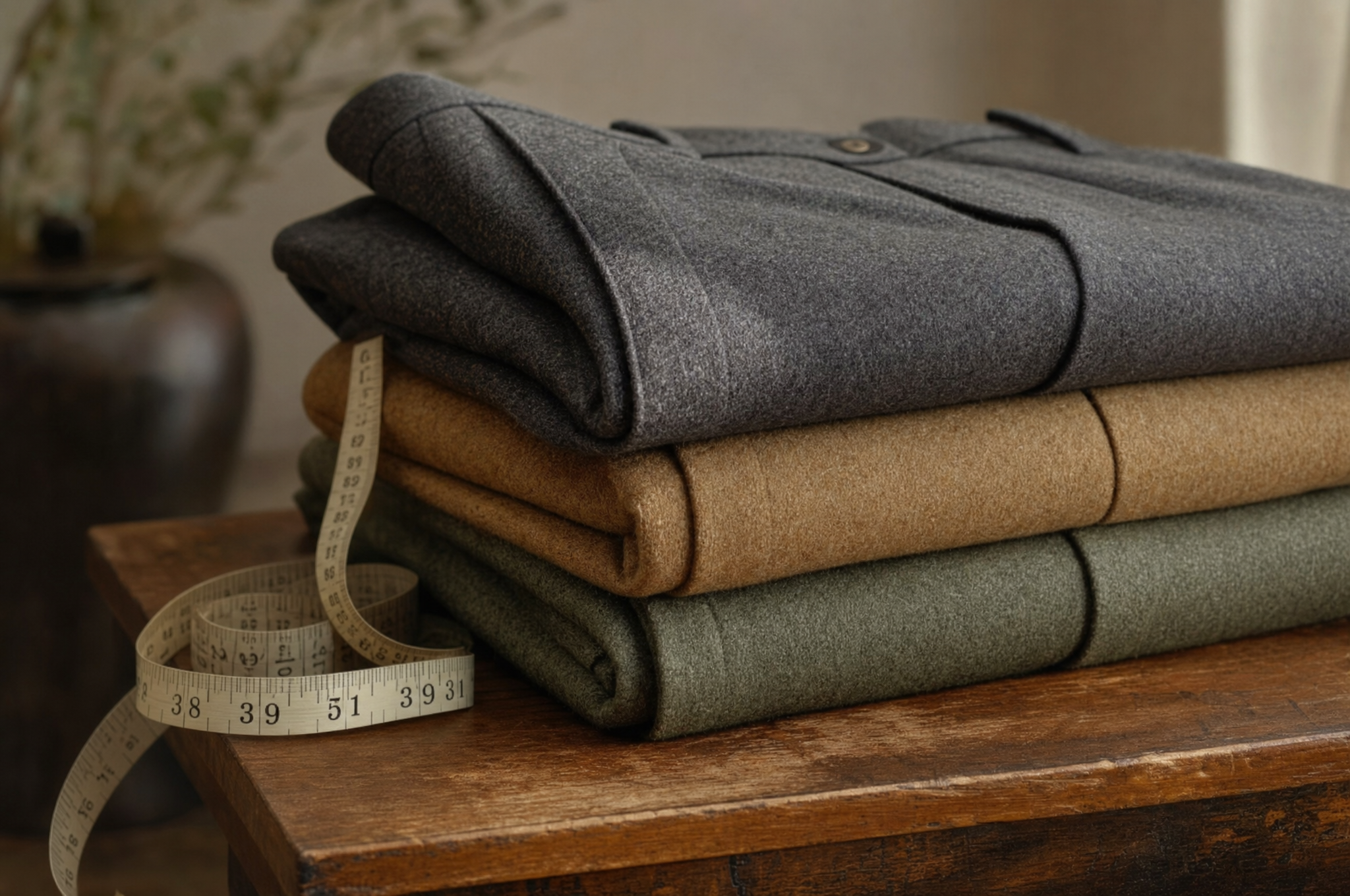
Here's something that surprises most people: "wool" is not a fabric. It's a fiber. The fabric — the thing you actually wear — is created when that fiber is spun into yarn and woven into cloth. And the way it's woven changes everything. Two trousers, both labeled "100% wool," can feel completely different, drape completely different, wear completely different, and be appropriate for completely different occasions.
If you've ever bought a wool trouser that felt stiff and scratchy, or one that drooped and lost its shape by noon, the problem wasn't the wool. The problem was that you didn't know which weave you were buying. This guide fixes that. We'll cover the three most important wool weaves for trousers — tropical, flannel, and crepe — and by the end, you'll know exactly which one you need for which purpose.
Why Wool Is the Finest Trouser Fabric
Before we get into weaves, let's talk about why wool is worth your attention in the first place. No other fiber offers the same combination of properties:
- Breathability: Wool fibers are naturally porous, allowing air to circulate. A wool trouser in the right weave can be comfortable in 90-degree heat.
- Temperature regulation: Wool insulates when it's cold and breathes when it's warm. It's the only common trouser fabric that genuinely works year-round.
- Drape: Quality wool has a weight and fluidity that synthetic fabrics can't match. It falls rather than hangs.
- Wrinkle resistance: Wool fibers have a natural crimp that allows them to bounce back from compression. A wool trouser resists wrinkling better than cotton or linen.
- Durability: A well-made wool trouser, properly cared for, can last a decade or more. The fiber is remarkably resilient.
- Moisture management: Wool can absorb up to 30% of its weight in moisture without feeling wet. It keeps you dry in humid conditions.
The key to all of these benefits, though, is choosing the right weave for the right purpose. Let's break down the big three.
Tropical Wool: The Summer Champion
What It Is
Tropical wool — sometimes called "tropical weight wool" or simply "tropical" — is a lightweight, openly woven wool fabric. The weave is loose enough that you can see light through it when you hold it up. The yarns are fine and tightly twisted, which gives the fabric a crisp, slightly dry hand feel.
How It Performs
Tropical wool is the most breathable woven fabric available for trousers. The open weave allows air to pass through freely, making it the ideal choice for warm weather. Despite its lightness, tropical wool holds its shape well — the tightly twisted yarns give it a crispness that resists wrinkling and maintains a clean line.
The trade-off is that tropical wool is less forgiving than heavier weaves. It doesn't drape as fluidly as crepe, and it shows every line and seam. This makes it excellent for structured, tailored looks but less suited to soft, flowing styles. It's the fabric you want for a crisp wide-leg trouser or a sharp tapered trouser — not for something soft and relaxed.
When to Wear It
- Season: Late spring through early autumn. Tropical wool shines in warm weather.
- Occasion: Office, events, evening — anywhere you want to look polished without overheating.
- Best for: Structured silhouettes. Straight-leg, tapered, and wide-leg trousers all work beautifully.
Tropical wool is proof that you don't have to choose between looking sharp and staying cool. It's the thinking woman's summer fabric.
Flannel: The Autumn Icon
What It Is
Flannel is a wool fabric that's been brushed — either on one side or both — to raise the surface fibers, creating a soft, slightly fuzzy texture. The brushing process gives flannel its characteristic warmth and its matte, velvety appearance. Underneath the brushed surface, the weave is typically a twill, which gives the fabric durability and drape.
How It Performs
Flannel is the cold-weather wool. The brushed surface traps air, creating insulation that makes it significantly warmer than a smooth wool of the same weight. The texture also gives flannel a unique visual depth — light catches the raised fibers in a way that makes the fabric look rich and substantial.
In terms of drape, flannel falls beautifully. It's heavier than tropical wool, which means it moves with more authority — think of the difference between a light scarf and a wool blanket in motion. This weight makes flannel ideal for full-volume styles; a flannel wide-leg trouser or a fluid pleated trouser moves with a gravitas that lighter fabrics can't achieve.
The trade-off is warmth. Flannel is genuinely cold-weather fabric. Wearing flannel trousers in summer is a mistake — you'll overheat, and the fabric will look wrong for the season. Reserve flannel for late autumn through early spring.
When to Wear It
- Season: October through March. Flannel is made for cold weather.
- Occasion: Office, evening, formal events. Flannel reads as elevated and considered.
- Best for: Full-volume and pleated styles. The weight and drape of flannel make it the finest fabric for pleated trousers.
Wool Crepe: The Effortless Elegant
What It Is
Wool crepe is a wool fabric with a characteristically pebbled, textured surface. The texture is achieved through a combination of tightly twisted yarns and a specific weaving technique that creates a crinkled, three-dimensional surface. The result is a fabric that looks and feels different from any other wool — softer, more textured, and with a distinctive matte finish.
How It Performs
Wool crepe is the most forgiving of the three weaves. The pebbled texture and the natural stretch of the twisted yarns mean that crepe moves with the body, skims rather than clings, and forgives minor fit imperfections. It drapes more fluidly than tropical wool or flannel, making it the go-to fabric for styles that need to flow.
Crepe is also the most wrinkle-resistant of the three. The textured surface naturally disguises minor creasing, and the fabric's natural spring means it recovers well from compression. This makes it an excellent travel fabric — a wool crepe trouser can survive a long flight and emerge looking presentable.
The trade-off is that crepe is less structured than tropical wool or flannel. It doesn't hold sharp creases or crisp lines as well. This makes it less suited to highly tailored, architectural styles and more suited to softer, more fluid designs. It's the fabric for a pleated trouser with soft drape, not for a razor-sharp tapered trouser.
When to Wear It
- Season: Year-round. Wool crepe is one of the most versatile fabrics available.
- Occasion: Everything from office to evening. Crepe's texture makes it appropriate for formal settings, while its comfort makes it wearable for everyday.
- Best for: Pleated trousers, wide-leg trousers, and any style where drape and movement are priorities.
Comparison at a Glance
| Property | Tropical | Flannel | Crepe |
|---|---|---|---|
| Weight | Light | Medium-Heavy | Medium |
| Season | Spring-Summer | Autumn-Winter | Year-round |
| Drape | Crisp | Fluid, weighty | Soft, flowing |
| Texture | Smooth | Brushed, soft | Pebbled |
| Wrinkle Resistance | Good | Good | Excellent |
| Best For | Structured tailoring | Full-volume styles | Pleated, flowing styles |
Which Wool Should You Buy First?
If you're buying your first quality wool trouser, we recommend wool crepe. It's the most versatile — wearable year-round, forgiving in fit, appropriate for the widest range of occasions, and the most comfortable from day one. A wool crepe trouser in a neutral color (charcoal, navy, or camel) will serve you in virtually every context.
Your second wool trouser should be tropical wool for summer. Nothing else keeps you cool and polished in warm weather the way tropical wool does. A tropical wool trouser in cream or light gray is a summer staple you'll reach for constantly.
Your third should be flannel for winter. A charcoal or navy flannel trouser is the cold-weather equivalent of the tropical wool summer trouser — the piece that makes winter dressing feel luxurious rather than endured.
Together, these three weaves cover every season and every occasion. They're the foundation of a well-built trouser wardrobe, and understanding their differences is the difference between buying trousers randomly and buying them strategically.
Caring for Wool Trousers
Wool requires specific care to maintain its properties. The golden rule: wool should be rested, not washed. After wearing wool trousers, hang them on a good hanger (clipped at the waist, not folded over a bar) and let them rest for at least 24 hours. The fibers will recover their shape naturally.
For cleaning, dry cleaning is the default — but it should be infrequent. Dry cleaning too often strips wool of its natural oils and shortens its life. Spot-clean when possible, dry clean only when truly necessary (typically every 5-10 wears, depending on use). For the full care guide, see our article on caring for tailored trousers.
The Bottom Line
Wool is the finest trouser fabric available, but only if you understand what you're buying. Tropical, flannel, and crepe each serve a different purpose, and the woman who knows the difference is the woman who always looks right for the season and the occasion. Learn the weaves, choose with intention, and your wool trousers will reward you for years.